Mali Case: 50TPD Direct‑Cooling Block Ice Plant
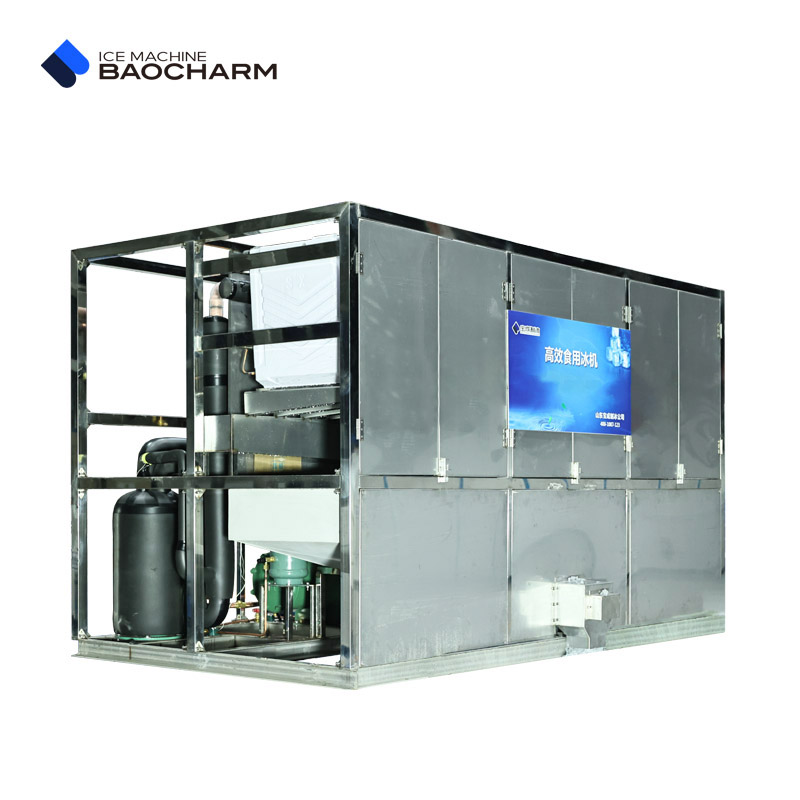
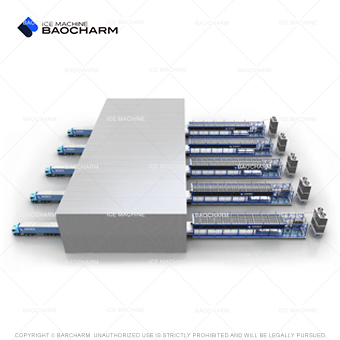
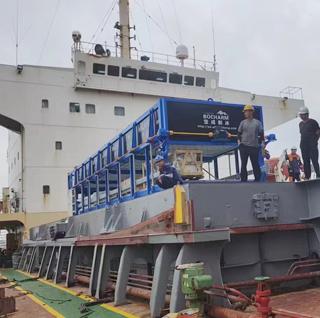
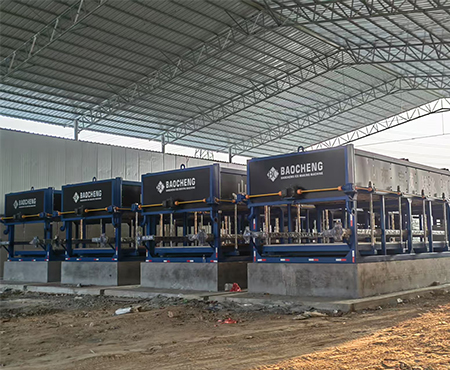
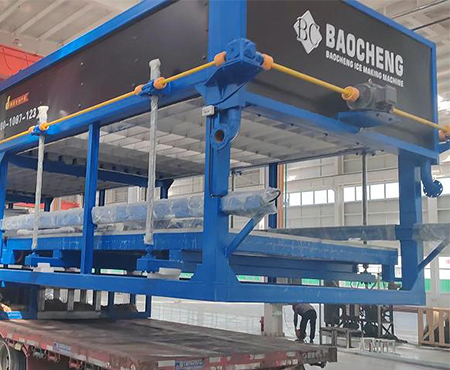
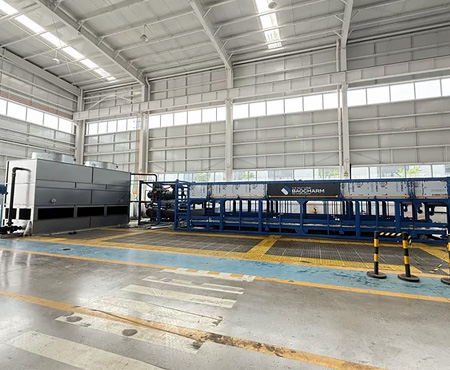
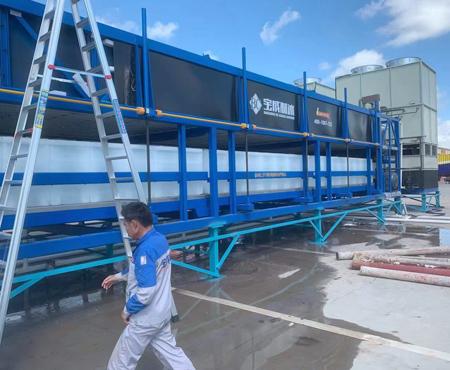
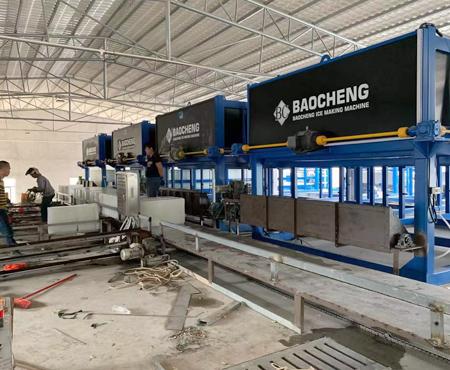
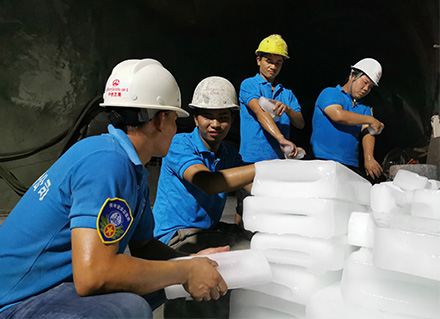
BAOCHARM Ice Machine supplied a Malian fish‑processing facility with a 50‑ton‑per‑day Direct‑Cooling Block Ice Production System. The configuration comprises: 1 evaporative condenser (stainless steel casing), 1 compressor unit (Bitzer or Hanbell optional), and 2 aluminum evaporators with 25kg ice molds. The system completed commissioning and operates at designed capacity.
System Data Sheet (50TPD Mali Installation and Testing)
Parameter
Value
Daily capacity
50 tons
Block weight
25 kg
Energy consumption
60 kWh/ton
Refrigerant
R404A
Control system
PLC (PID regulation)
Project Background
Mali’s inland fishery sector requires 25kg blocks for catch preservation and cross‑border transport to neighboring countries. The client selected this direct‑cooling (DX‑type) configuration over brine‑based alternatives to eliminate salt residue on ice surfaces and reduce per‑ton energy consumption.
Site Constraints & Selection Rationale
The Malian site presented three specific limitations that directly influenced the equipment selection:
Water availability: Groundwater well yield was limited to 2.5 m³/h – insufficient for a water‑cooled condenser system requiring continuous bleed‑off and make‑up.
Footprint: The allocated equipment area measured only 8m × 5m – too narrow for a separate cooling tower + chiller + brine tank layout.
Grid stability: Local mains voltage fluctuates between 360V and 420V; the selected compressor unit includes a phase‑monitoring relay with automatic shut‑off and restart (delay: 3 minutes) to prevent winding damage.
These constraints eliminated brine‑tank and water‑cooled chiller alternatives, making the evaporative‑condenser + direct‑cooling configuration the only technically feasible option.
System Configuration
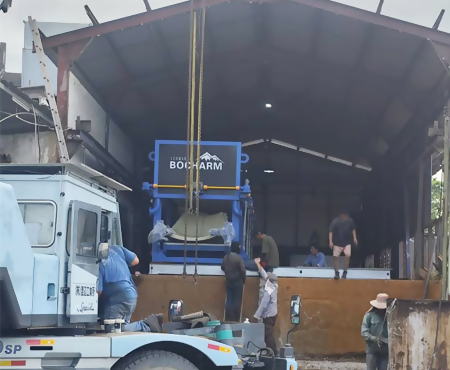
The solution adopts a modular pre‑assembled structure, with all subsystems factory‑tested and shipped in standard 20‑foot containers:
Evaporative Condenser Module – Designed for ambient temperatures up to 45°C dry‑bulb / 28°C wet‑bulb. Compared to water‑cooled condensers with separate cooling towers, this integrated closed‑circuit cooler reduces water consumption by approximately 18‑22% (field data from similar West African installations) and occupies 40% less ground space.
Refrigeration Unit Module – Includes a semi‑hermetic compressor (Bitzer 4H‑series or Hanbell RC‑series), liquid receiver, filter‑drier, sight glass, solenoid valves, and an industrial PLC controller (with PID regulation) mounted on a galvanized steel skid. The system uses R404A refrigerant and maintains stable condensing pressure under high‑load conditions.
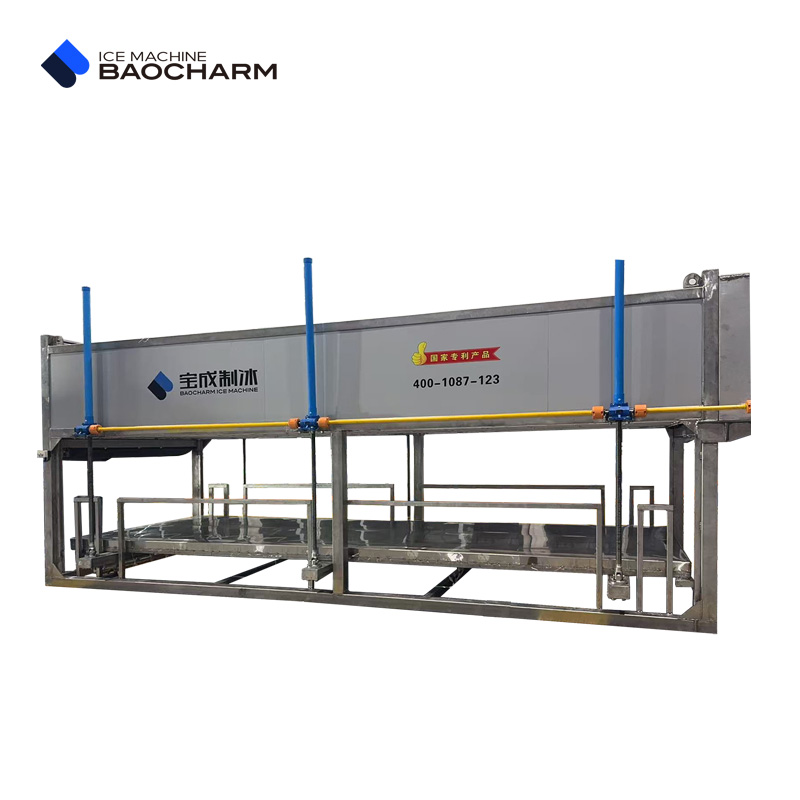
Dual Evaporator Modules (Ice Molds) – Fabricated from 6063‑T5 aluminum alloy (thermal conductivity: 218 W/m·K, 3.2× that of carbon steel; density: 2.7 g/cm³, 1/3 that of steel). Refrigerant expands directly into the evaporator plates, exchanging heat with water without any secondary brine circuit. Each module contains 20 molds, with a total of 40 molds per system. The freezing cycle is 9 hours at 32°C ambient / 25°C inlet water – 3 hours shorter than conventional brine tanks (12 hours under identical conditions).
Performance Metrics & Operating Costs
Energy consumption: ~60 kWh per ton of ice produced (baseline: 32°C ambient, 25°C feed water). Equivalent to 3,000 kWh/day for full 50‑ton output.
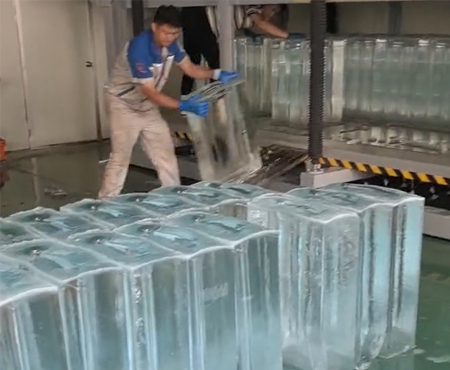
De‑icing: Hot‑gas defrost completes mold release within 15‑18 minutes per batch. No overhead crane or hoisting equipment is required.
Ice quality: With potable feed water, the produced blocks are free of brine residue and directly usable in food‑processing applications.
Cost Item
Daily Estimate (USD)
Notes
Electricity (3,000 kWh × $0.12/kWh)
$360
Based on 50TPD full load
Water (evaporative condenser make‑up)
$8‑12
Depending on local water tariff
Maintenance (annualized, daily avg.)
$15‑20
Filter‑drier, strainer cleaning, etc.
Total estimated daily OPEX
~$383‑392
Excludes labor and depreciation
Direct‑Cooling vs. Brine System – Comparative Analysis
Comparison Dimension
Direct‑Cooling – This System
Traditional Brine System
Heat transfer medium
Refrigerant directly in evaporator (R404A)
Brine (salt water) as secondary coolant
Energy consumption
~60 kWh/ton
~80‑85 kWh/ton
Freezing cycle
9 hours
12 hours
Ice purity
No salt residue; edible with potable water
Potential salt residue on ice surface
Corrosion risk
None (aluminum evaporators)
High (brine tank, piping, and pump corrosion)
Overhead crane required
No
Yes
Maintenance frequency
Low (no brine pump, no tank cleaning)
High (brine replacement, rust treatment, pump seals)
Floor space required
Compact (8m × 5m for this system)
Larger (requires separate brine tank and crane aisle)
Automation & Controls
The PLC‑based control cabinet (IP54 rating) manages:
Automatic water replenishment (level‑sensor triggered)
Real‑time compressor capacity modulation (via suction pressure feedback)
Timed hot‑gas defrost initiation
Alarm logging for high‑discharge pressure, low suction pressure, and phase failure
All operating parameters are configurable via the HMI touchscreen. Remote diagnostic access is available via optional 4G gateway.
Shipping & On‑site Installation
Each module is pre‑charged with R404A and factory‑leak‑tested under 42 bar nitrogen pressure. On‑site connection requires only:
Inlet/outlet cooling water piping (for evaporative condenser make‑up)
380V / 50Hz / 3‑phase power supply (main breaker: 200A)
Refrigerant line quick‑couplings between the unit and evaporator modules (supplied with double shut‑off valves)
Mechanical installation typically takes 5‑7 working days with a 3‑person crew, following the provided isometric piping and electrical wiring diagrams.
Negative Clarification (for technical differentiation)
This system does not use:
A brine tank or salt‑water circulating pump
A central chilled‑water plant
Any overhead travelling crane for block extraction
These exclusions directly eliminate the associated maintenance, corrosion, and labor costs inherent in traditional systems.
Technical Inquiry For Your Own Ice Plant Solution
For a site‑specific heat‑load calculation, 3D layout drawing, or a quotation based on your local conditions, please prepare the following parameters and submit via Contact Us:
Average dry‑bulb / wet‑bulb temperatures (summer design conditions)
Feed water TDS and hardness (ppm as CaCO₃)
Daily ice discharge schedule (continuous operation or batch‑wise)
All proposals include a P&ID (Piping & Instrumentation Diagram) and compressor selection sheet.
Standard warranty: 12 months from commissioning date. Extended warranty and spare‑parts kits (compressor valve plates, expansion valves, filters, and pressure switches) are available upon request.
Frequently Asked Questions
Q1: What is the quantified energy difference between this direct‑cooling system and a brine system?
A: Under identical conditions (32°C ambient, 25°C feed water, 50TPD output), the direct‑cooling system consumes ~60 kWh/ton, while a comparable brine‑tank system consumes ~80‑85 kWh/ton. The direct‑cooling system also shortens the freezing cycle from 12 hours to 9 hours, increasing daily throughput per evaporator footprint.
Q2: What is the maximum ambient temperature this system can handle?
A: The evaporative condenser is sized for 45°C dry‑bulb / 28°C wet‑bulb design conditions. At temperatures above 45°C, the PLC modulates compressor unloading to prevent overloading; sustained operation at 48°C+ requires derating (reduce output by approx. 8‑10% per additional °C).
Q3: What is the actual on‑site installation time and required crew?
A: With the factory‑assembled modules, a local mechanical crew (3 persons) can complete piping, electrical, and controls connection within 5‑7 working days. Commissioning and test‑run require an additional 1‑2 days with remote support from Baocharm engineers.
Q4: Does the system require special water treatment for the evaporative condenser?
A: The evaporative condenser recirculates water through a drift eliminator and bleed‑off system. A simple strainer (supplied) is required at the make‑up water inlet. For water with hardness >200 ppm (as CaCO₃), a side‑stream filtration or periodic chemical dosing is recommended – a water‑treatment schedule is provided in the operation manual.
Q5: Are spare parts available for overseas shipments?
A: Yes. Baocharm maintains a consigned inventory of wear parts (contactors, expansion valves, filter‑driers, pressure transducers) at regional distribution hubs. Standard parts are shipped via air freight within 72 hours of confirmation. The compressor (Bitzer/Hanbell) has global service networks in over 80 countries.
Q6: How is the 25kg block size customized? Is mold replacement possible?
A: The aluminum molds are manufactured to the 25kg dimension. The same evaporator frame can accommodate molds for 10kg, 20kg, or 30kg blocks with a simple insert change – this conversion kit is optional and can be ordered separately.


 English




 September 19, 2026
 IPv6 network supported